

Ask around about Uluru, and most Aussies nod. Ask about Field of Light, and they lean in. “Oh yeah — that art thing with the lights, right?” Right. But what they don’t tell you is that it’s more than just beautiful lights in the desert. It’s a sensory slow dance between land, art, culture, and yes, you can see Uluru from there. But maybe not how you think.
Contents
A Desert Garden That Glows
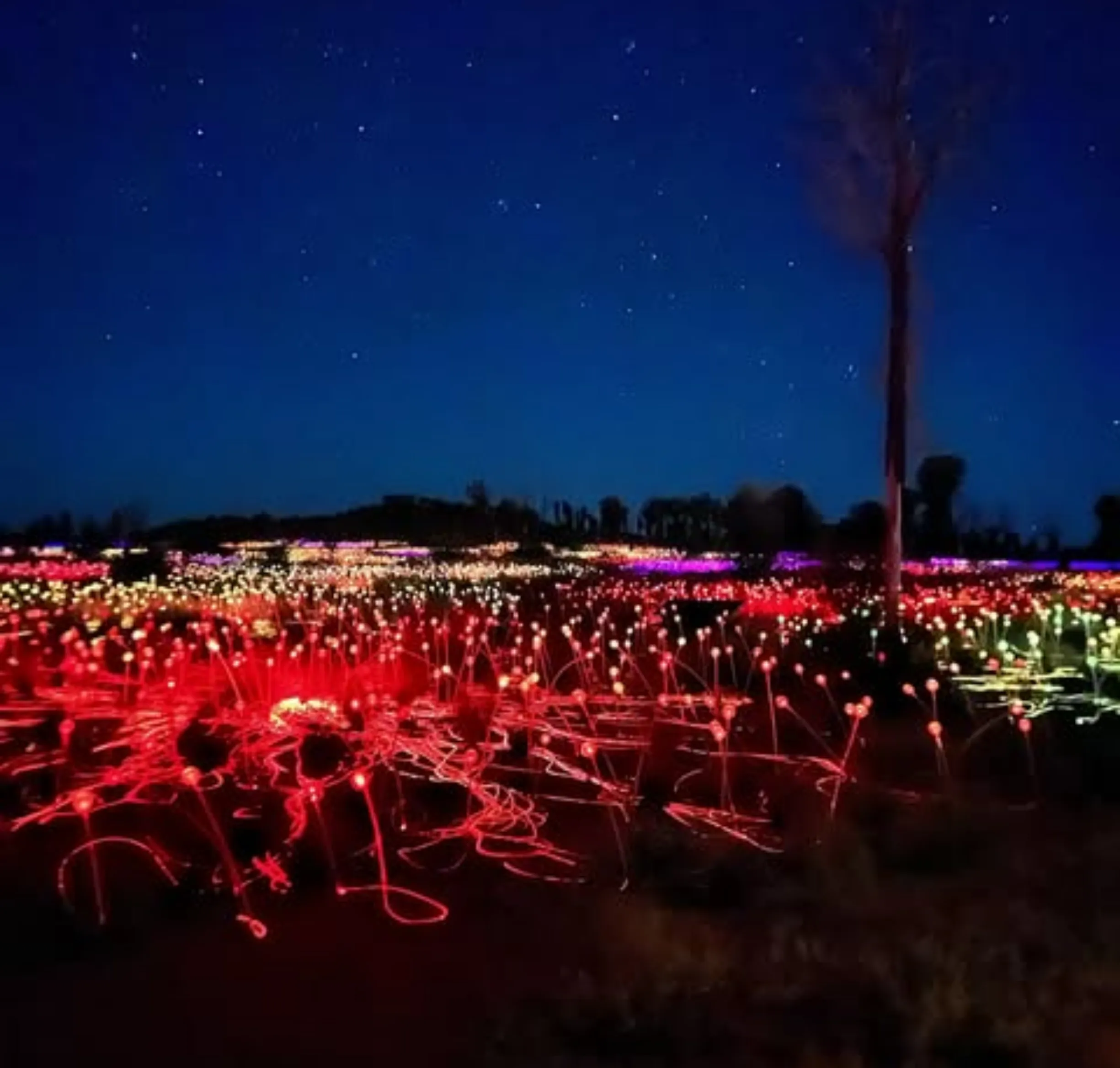
Out in the red dirt near Ayers Rock Resort, British artist Bruce Munro brought a dream to life — literally. Inspired by his travels through Central Australia, he planted a fantasy garden of 50,000 solar-powered spindles of light. Each one ends in a frosted glass sphere that flickers and glows like a shy firefly, tethered to slender stems and bulbs on metal stems.
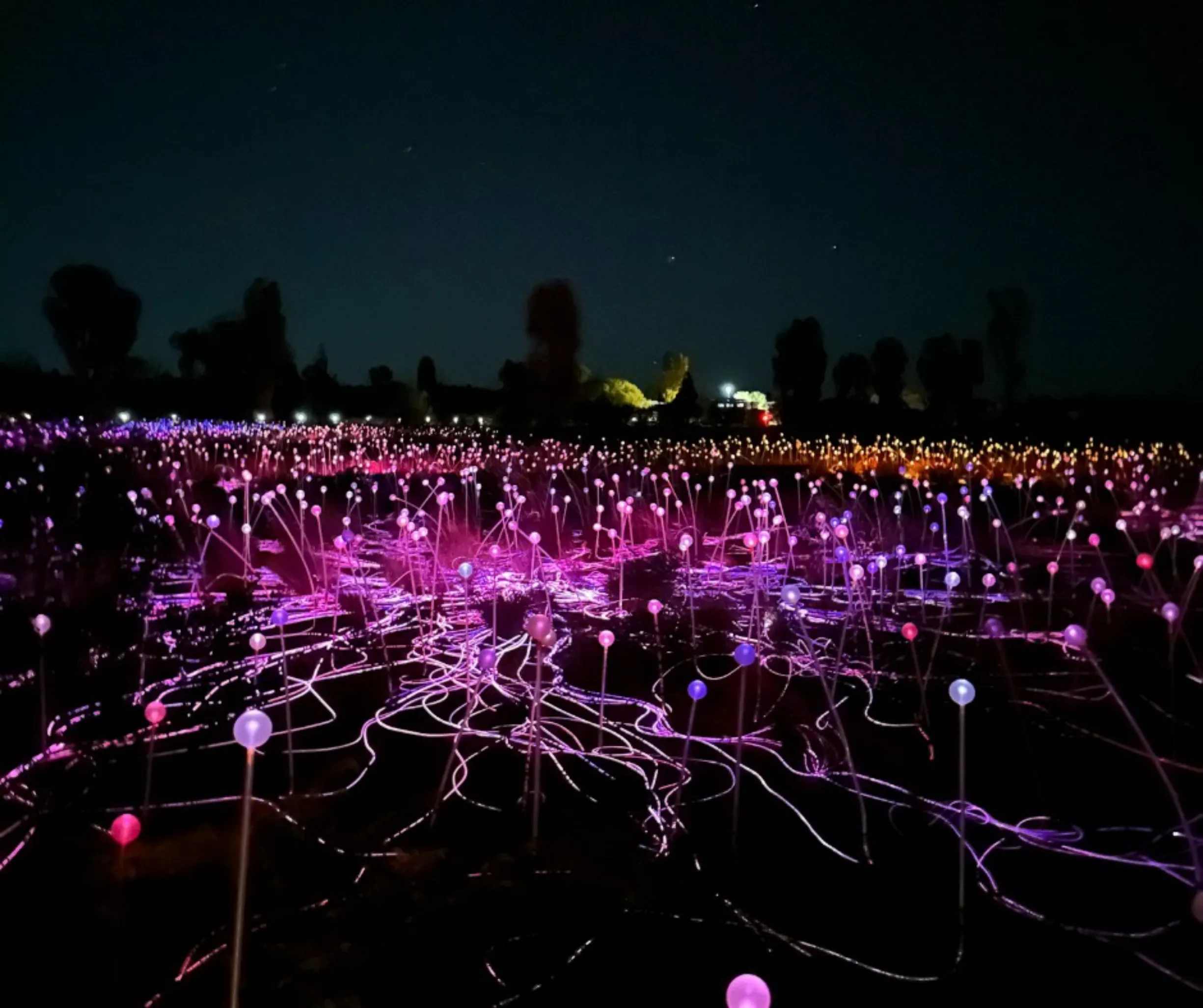
The result? A shimmering sea of colour that stretches across the desert plain, about seven football fields wide. Locals reckon it’s as if the desert is breathing in gentle rhythms, shifting through a sympathetic desert spectrum of ochres, deep violets, and brilliant whites.
And hovering in the distance, on a clear night or morning — Ayers Rock. Silent. Massive. Watching.
Can You Actually See Uluru?
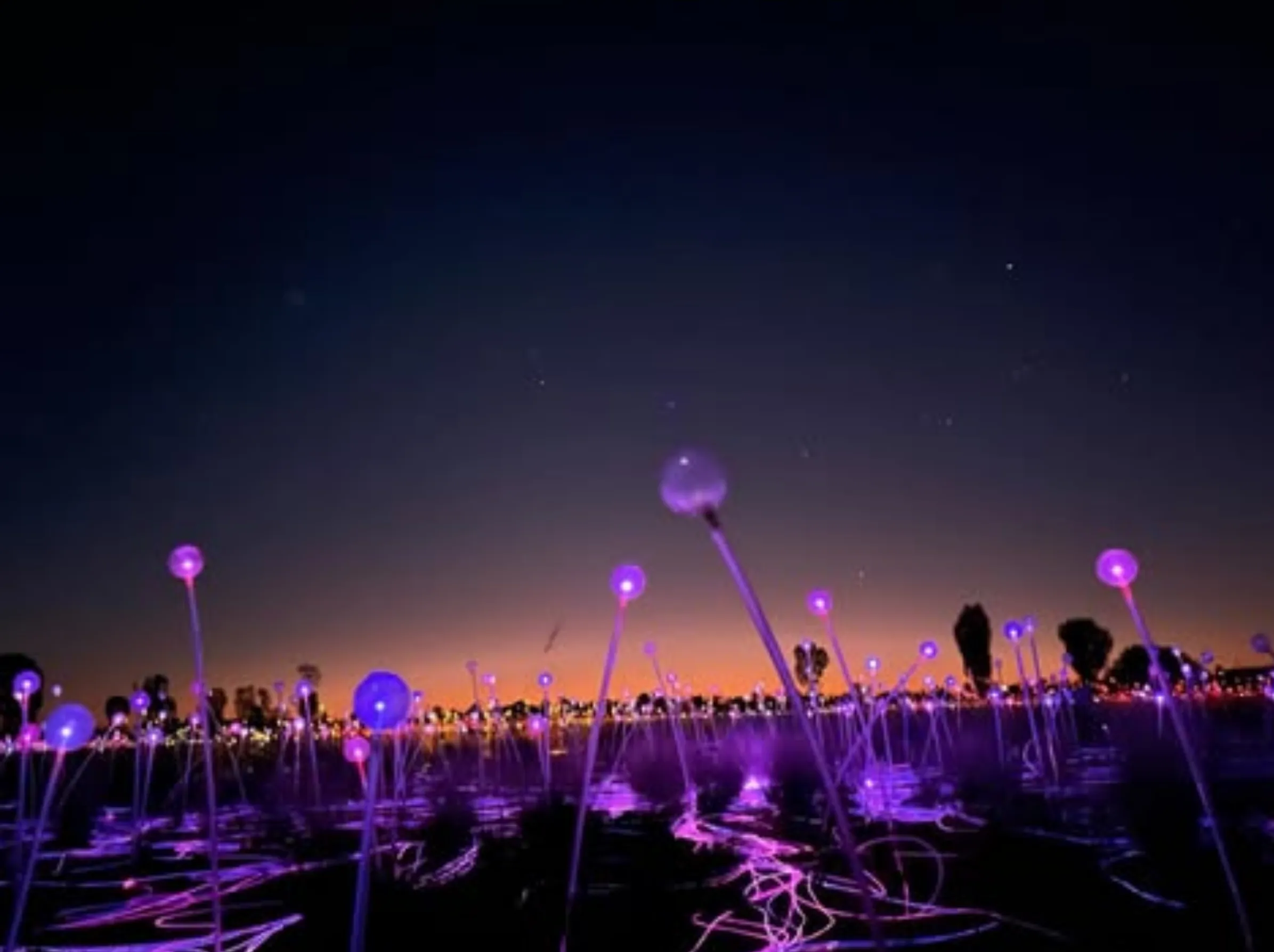
Yes, you can see Uluru from Field of Light — but not in the glossy, fire-red postcard kind of way. Think silhouette rather than spotlight.
Because the light installation sits about 2km from the base of Uluru, views of the ancient rock formation are unobstructed, particularly during sunrise viewing or at twilight. If you’re expecting high-def detail, temper those city lights expectations. You won’t see crevices or rock art from here, but you will see its hulking form rise from the desert like a giant asleep under a blanket of stars.
In the cooler months (May to August), the air is crisp and the desert sky is typically clearer, giving you ample time to spot the contours of Uluru just before full darkness takes hold. In summer months, heat haze and humidity can play tricks with visibility, so aim for dawn or dusk.
Best Ways to Experience the Field of Light
Here’s the trick — there’s no DIY wandering into the bush with a phone light. Entry is by booking only, and with good reason. This isn’t just an art installation — it’s a cultural experience designed with input from the traditional owners of the land.
1. Field of Light Star Pass
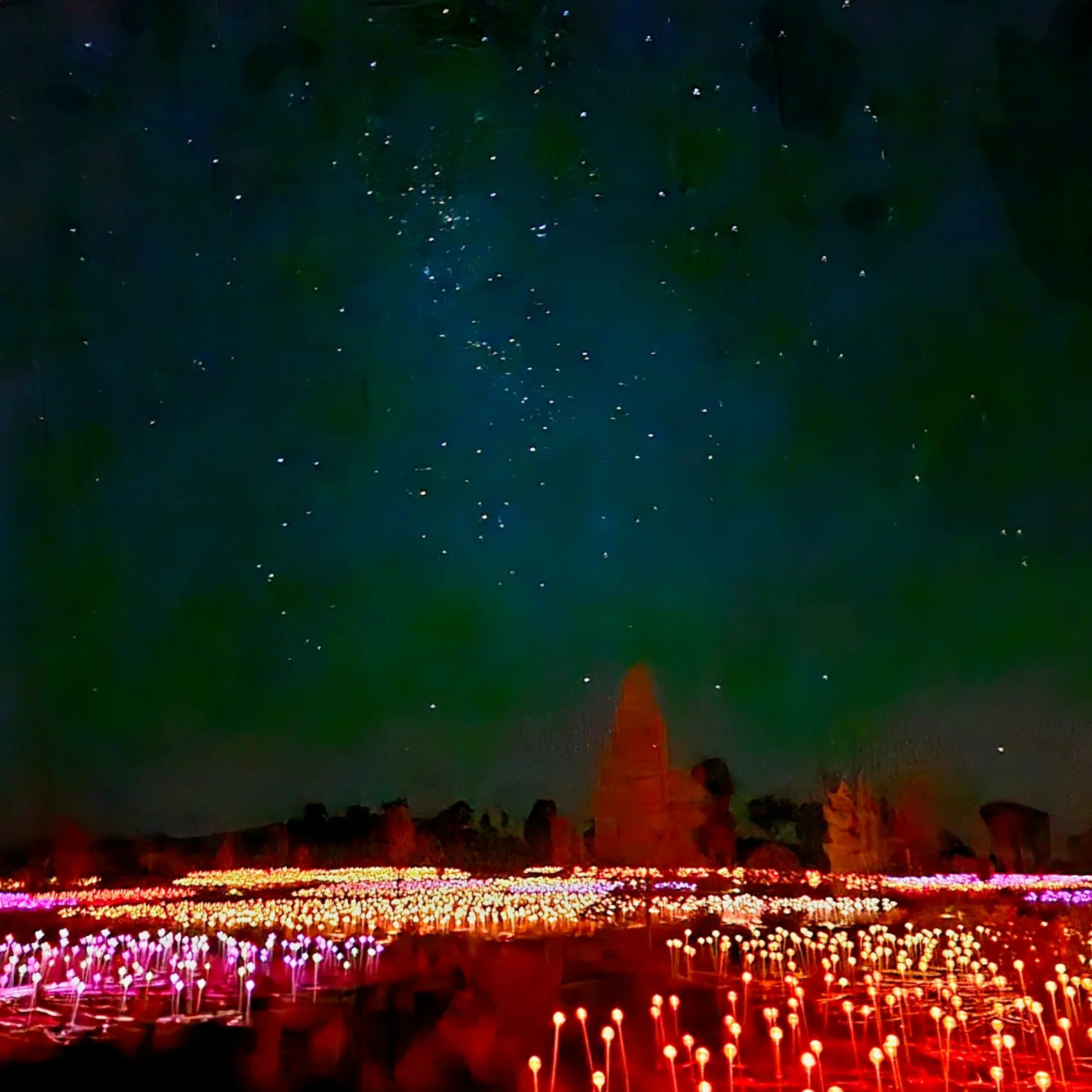
The most popular choice. You get access to the exclusive dune-top viewing area, plus a glass of wine and a selection of outback canapés as the sun sinks and the lights come up. From up on the dune, you get clear views of both the art and the iconic silhouette of Ayers Rock.
2. Field of Light Sunrise
Perfect for those chasing cooler temps and clarity. You arrive in complete darkness, and as the solar lights flicker below your feet, the desert begins to glow with natural light. You’ll see Uluru shift from black to burnt amber as dawn light stretches across the landscape. Bring warm layers — the desert before sunrise bites.
3. A Night at Field of Light
Want the full shebang? This one includes an exclusive dining experience with a three-course bush tucker–inspired menu, paired wines, and tales under the Southern night skies. You’ll watch the changing-hued frosted lights pulse across the desert while Uluru keeps quiet vigil behind.
Many travellers who book a Uluru tour include Field of Light in their itinerary, especially if they’ve only got a few days in the Red Centre.
What Makes This Installation Different?
Let’s be clear — this isn’t just fairy lights in the bush. Field of Light is the largest installation Bruce Munro has ever created. That’s saying something, considering he’s earned critical acclaim from art lovers across the globe.
But it’s not the monumental scale that gets you. It’s the context. There’s something about seeing art bloom in a barren desert, powered only by solar energy, that hits harder than any gallery. It’s ephemeral — much like the dormant desert seeds that wait for rain. It doesn’t shout. It hums.
Munro himself calls it a “Field of Light that becomes one with the rhythms of colour light in the desert.” And he’s right. It’s not there to distract from Uluru — it’s there to honour it.
Practical Trip Planning Info
Where Is It?
- Located within the Ayers Rock Resort precinct, near Yulara
- 2km from Uluru (Ayers Rock) itself
- Inside Uluru-Kata Tjuta National Park (also known as Tjuta National Park or Kata Tjuta National Park in some listings)
When to Go?
- Cooler Months: May to August – clearer skies, better silhouettes, frosty mornings
- Summer Months: Hot as guts, but sunsets can be wild with colour — bring water and a sense of humour
- Best visibility of Uluru? Just after sunset or just before sunrise
Transport
- All tours include pick-up time and return transfers in an air-conditioned coach
- No self-drive or caravanning trip access — bookings are essential
a What to Bring
- Warm layers (evenings can drop below 5°C)
- Comfy shoes (uneven terrain, soft desert sand)
- CameraA camera
- Respect for Country — no drones, no touching the lights, stay on paths
If you’re coming in via Alice Springs, check out the full-day and overnight Uluru tours from Alice Springs, which often include a stop at Field of Light as part of the route.
Booking Tips and Travel Deals
Because of popular demand, Field of Light books out, particularly in school holidays and winter. You’ll want a confirmed ticket in hand before you leave Alice Springs or board your flight.
Book directly through Ayers Rock Resort or vetted booking agencies like BlueSun Travel, who specialise in Australian experiences and offer twin share options for couples. Wayoutback Tours also offers solid group experiences that combine Field of Light with other iconic Central Australia locations.
Some packages also include extras like:
- Entry to Uluru Sunrise & Field of Lights
- Dinner + dune-top access + charter boat booking agency add-ons (for multi-destination travellers)
- Bucket list trip perks like hot chocolate on arrival or exclusive dune access
Pro tip: Many travellers choose to base themselves at Ayers Rock Campground or book family-friendly accommodation options at the Resort. For those with holiday dollars to stretch, there are exclusive dining experiences and private viewing platform upgrades.
What Makes It Special?
Beyond the Lights
- Deep connection to the land, told through light rather than words
- Celebrates Indigenous communities by using non-invasive tech and respecting sacred sites
- Highlights the desert landscape — the dry desert, the colours of ochre, and the ancient rock itself
- Offers a rare view of the Southern night skies far from any city lights
- Seamlessly blends art to life — no two nights feel the same under that outback sky
Planning a few Uluru trips? Pair the Field of Light with a traditional Uluru tour during daylight hours for a complete experience.
Uluru, Kata Tjuta and Beyond
You’re already halfway across the country — might as well soak up more of the outback’s top-tier sights:
- Uluru Base Walk – a 10.6km track hugging the rock’s base. See rock art, waterholes, and sacred sites. It’s often included in guided Uluru tours for those keen to hear the stories from local guides.
- Sunset Uluru tours are a must for photographers chasing that classic red glow. Combine them with a night at Field of Light for the full dusk-to-dark transformation.
- Uluru tours from Alice Springs make the most of the long haul, often bundling in Kings Canyon and the West MacDonnell Ranges with a few nights near Ayers Rock.
- Kata Tjuta / The Olgas – a cluster of domed rock formations just west of Uluru, with the Walpa Gorge walk being a solid sunrise option.
- Kings Canyon – ideal for a farewell trip or a couple of months later. Hike the rim walk at dawn — views are otherworldly.
Final Take
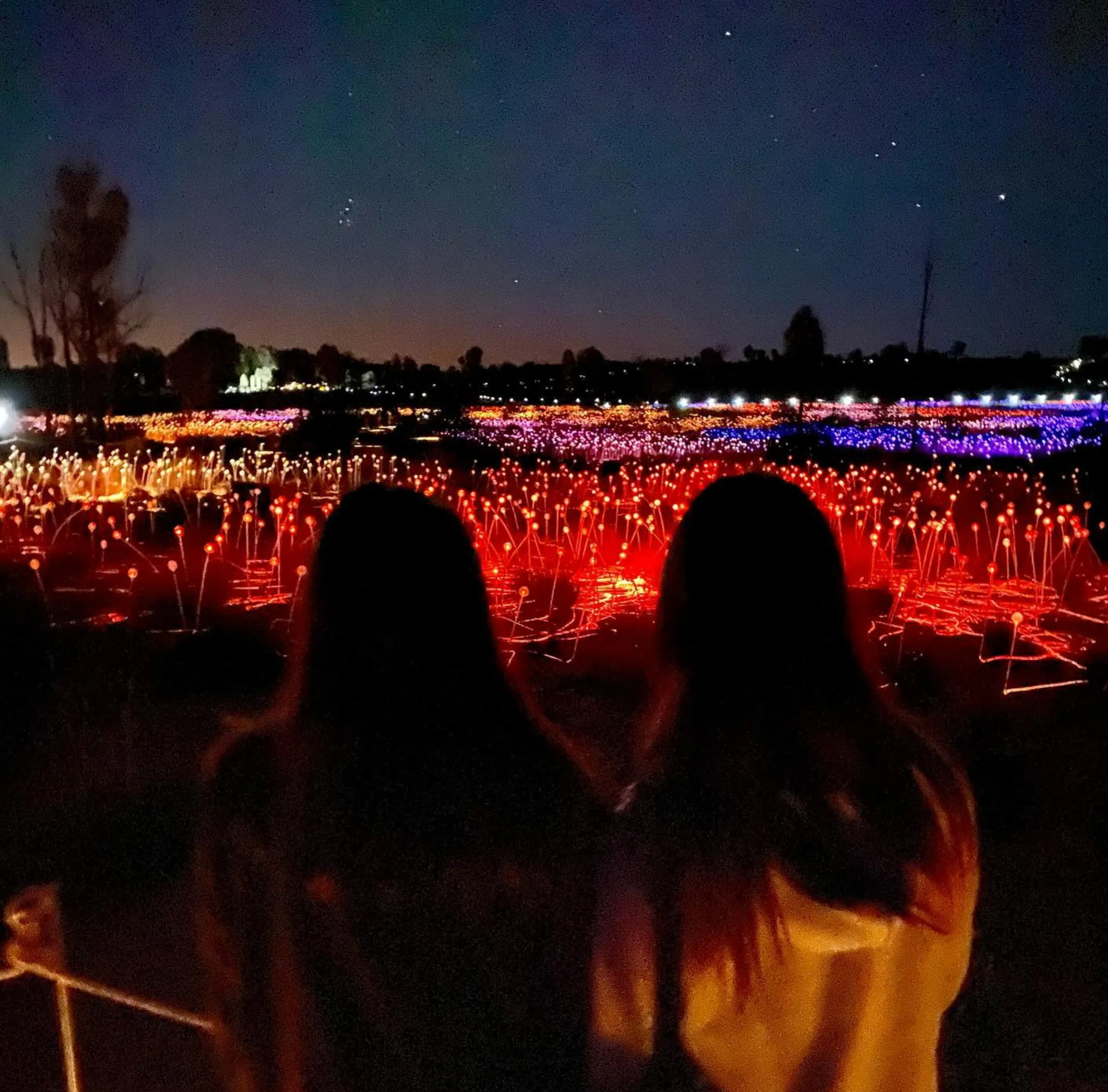
You don’t just “see” Uluru from the Field of Light. You witness it — like a story told in shadows.
The frosted glass spheres, the coloured lights, the desert art installation — they’re not there to compete. They’re there to complement. To whisper through light what this land has always said through silence.
It’s not a festival. It’s not just pretty. It’s an immersive installation that sits gently on ancient ground. The kind of place that doesn’t just light up your eyes — it rewires your sense of time.
So, yes — you can see Uluru. But what you’ll remember most is how it felt to be seen by it.
FAQ
Can you take photos at the Field of Light?
Yes — just no tripods unless part of a media booking. No drones. And please, no flashing torches or phone lights.
Is Field of Light kid-friendly?
Definitely. Kids love the glowing field of stems. Just keep them off the lights and prep them for the dark.
How long do you spend there?
Roughly 2.5 to 4 hours, depending on the tour. You’ll want ample time to wander and just soak it in.
Is it wheelchair accessible?
Yes, but best to mention needs during the booking process — not all pathways are sealed, and some dune areas involve uneven terrain.
Has the exhibition ended?
Nope — what was supposed to be a short-term project has stayed on due to exhibition after exhibition, followed and overwhelming support. Still glowing strong.